Home Peak Climbing & Expedition Ama Dablam Expedition 6812m
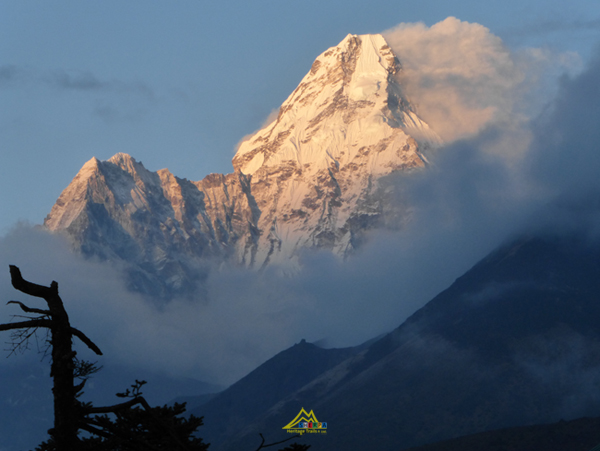
The Ama Dablam Expedition targets one of the Khumbu region’s most striking peaks. This distinctive pyramid dominates the skyline throughout every Everest rek. The mountain challenges climbers not with extreme altitude. Instead, it tests them with demanding technical routes and intense high-alpine climbing.
After you arrive at Lukla, you’ll hike for a couple of days towards the Ama Dablam base camp. Once there, you’ll have 15 days for acclimatization and a chance to push for the summit. The climb to the summit is usually done from the south-western ridge. Upon reaching the summit, the views are beyond words. Of course, you will see Mount Everest, but also good close-up views of Lhotse, Cho Oyu, Nuptse, Pumori, Baruntse, and Makalu.
Given all these factors, the Ama Dablam Expedition is challenging and technical. Therefore, you need previous experience of climbing before you take on this mountain.
After your arrival, we’ll have a gear check and make all the necessary preparations for permits for your Ama Dablam Expedition. The next day, your adventure starts with a flight from Kathmandu to Lukla. From the airstrip, you hike within a few days towards Namche Bazaar, the Sherpa capital. At Namche, you will enjoy an acclimatization day with a day hike to the famous Everest View hotel.
Leaving Namche, you hike to the monastery of Tengboche. Soon, you’ll veer off the main Everest trail towards Ama Dablam Base Camp. Here, you’ll acclimatize for a day and join a puja ceremony. With this sacred ritual, you’ll ask for blessings for a successful and safe climb.
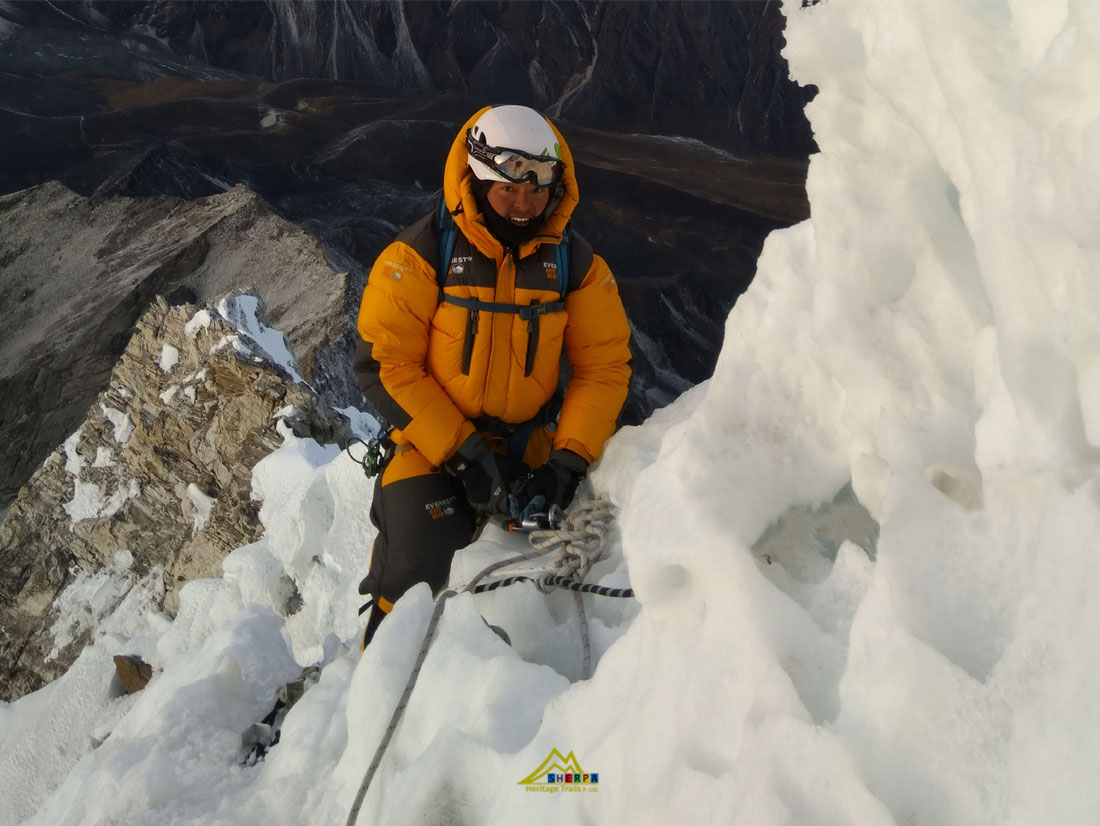
First, the Ama Dablam climb starts with a tiring, long scramble over boulders to Camp 1. Soon after you leave for Camp 2, the intense technical climb begins. The trail follows a rock ridge towards the base of the Yellow Tower. This Yellow Tower is an infamous vertical 12-meter rock wall. You’ll need fixed ropes to climb this wall.
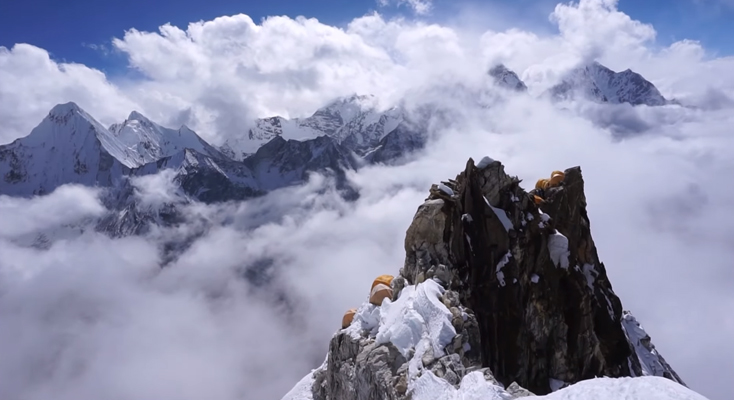
Next, Camp 2 (5900m) is situated just above the Yellow Tower, and it has limited tent space. Straight out of this camp, you will have to climb the Grey Couloir. This is also a long, vertical, and adventurous climb. After this, you will scramble over mixed rock, snow & ice airy ridges, also called the mushroom ridge.
Finally, Camp 3 is situated just above the “mushroom” at an altitude of 6300m. Camp 3 is the last camp before your final summit push. A successful summit depends on snow and weather conditions. The trail towards the summit follows a 50° snow & ice climbing section. Eventually, you will reach the fluted slopes that will lead to the exposed summit of Ama Dablam.
After celebrating your achievement, the descent towards base camp is the same route as the ascent. From base camp, it will take a few days to reach Lukla, where your Ama Dablam Expedition ends. Here, you’ll fly back to Kathmandu.
Our itineraries are designed to be flexible. If you would like to modify this plan, let us know, and we will work with you to create a personalized trip.
Day 1: Arrival Nepal; pick up at the international airport and drop off at a hotel in Thamel Kathmandu
Day 2: Final preparations for the Ama Dablam Expedition
Day 3: Flight from Kathmandu / Ramechap to Lukla (0,5 hrs.) and trek to Phakding (2640 m – 3 hrs.)
Day 4: Trek to Namche Bazaar (3440 m – 5 hrs.)
Day 5: Acclimatization day hike to the Everest View hotel
Day 6: Trek to Tengboche (3867 m – 5 hrs.)
Day 7: Trek to Ama Dablam Base Camp (4570 m – 7 hrs.)
Day 8: Acclimatization and puja
Day 9 - 24: Ama Dablam Expedition, climb and summit push
Day 25: Trek to Pangboche (3900m – 4 hrs.)
Day 26: Trek to Namche Bazaar (3440m – 7 hrs.)
Day 27: Trek to Lukla (2830 m – 6 hrs.)
Day 28: Flight from Lukla to Kathmandu / Ramechap (0,5 hrs.)
Day 29: Free day at leisure in Kathmandu
Day 30: Departure; pick up from the hotel and drop off at the international airport
During the trekking season prices may rise. The final price depends on the trekking season, group size and, if applicable, the cost of the local transfers.
Cost includes:
– Pick up and drop off from Kathmandu International Airport to the hotel
– Return flight Kathmandu/ Ramechap to Lukla and transfer to and from the domestic airport
– 4 nights hotel room in Kathmandu; breakfast included
– Teahouse room during trek
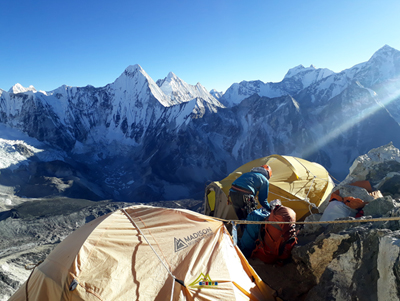
– Free use of tent equipment at base camp, including one tent per person and a light sleeping mattress; dining tent and heater, tables & chairs; toilet tent; cooking equipment
– During the expedition climb, 2 members in one dome tent, including a light sleeping mattress per member
– At Base Camp: Full board meals including breakfast/ lunch/dinner, tea/coffee/ hot chocolate/ hot water, cookies and, if possible, fresh fruit.
– During the climb alpine food meals
– Licensed and certified mountain guide. Well experienced and English speaking
– Experienced and certified climbing Sherpa
– Government liaison officer ; including wages, equipment, accommodation, etc.
– Porter and yak service for carrying luggage, tent equipment and climbing gear.
– Salary, food, accommodation and insurance for the mountain guide, climbing Sherpa, porters and cooking staff
– Climbing gear including: climbing harness, crampons, ice axe, helmet, climbing ropes, and a jumar
– Radio set and satellite phone during climb
– First Aid kit
– Emergency oxygen with mask and regulator
– Free use of one waterproof bag
– Sagarmatha National Park entrance fee, Ama Dablam climbing permit, TREK card and local taxes
– Support of the Sherpa Heritage Trails head office in Kathmandu
Cost excludes:
– International flight to Kathmandu
– Nepal entrance visa
– Personal clothing, climbing gear and personal medical kit
– Lunches and dinners in Kathmandu
– All other beverage bills, hot shower, internet services, laundry, and battery charge during trek
– Cost of satellite phone calls
– Personal travel and climbing insurance
– Rescue operation charge in case of an emergency
– Any cost of hotel/ teahouse/ transport related to the member terminating earlier than the scheduled itinerary from the expedition/ trekking
– Any cost that arises due to a change of itinerary, like health issues, flight delay, natural calamities, etc.
– Gratitude and tips for the mountain guide, climbing Sherpa summit bonus, porters, and cooking staff.