Home Langtang & Ganesh Langtang Valley Trek
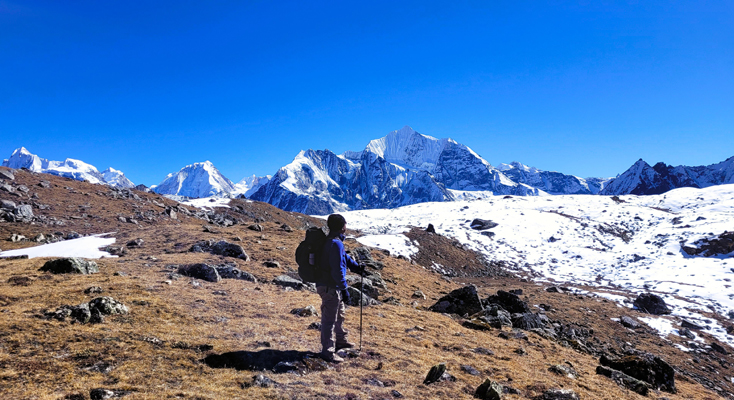
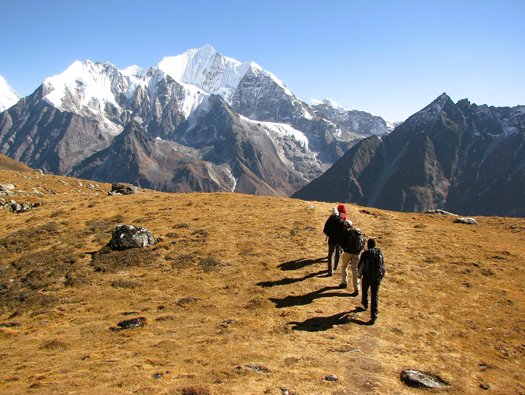
The Langtang Valley Trek begins quite close to Kathmandu. In fact, from certain viewpoints in the city, you can see the Langtang peaks. Better yet, the valley holds National Park status. The local ethnic Tamang and Sherpa people inhabit this region.
Departing from Kathmandu, a jeep will take you past local villages and farming terraces to Syabrubesi. This is where the Langtang Valley trek starts, with a crossing of the suspension bridge over the Langtang Khola River. Right after that, you climb up to Sherpa Gaon. Straight away, your reward is a great view of the gorge and the Langtang Khola River.
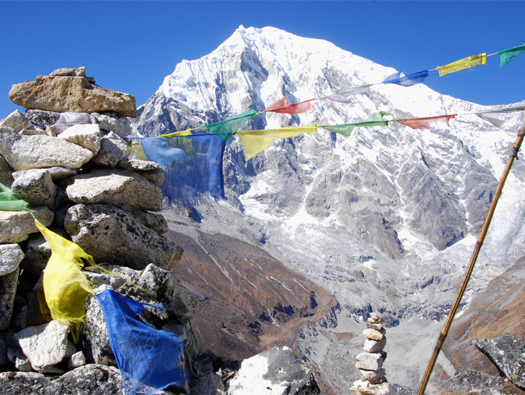
After a few days of hiking through thick rhododendron forest, the valley opens up. Here, you’ll find yourself surrounded by alpine meadows and small farming settlements. Along the way, you will be treated to stunning views far into the valley. Throughout these settlements, the local population is the Tamang and Sherpa people. And you will pass many Buddhist mani walls. Deep in the valley, we will stop in Langtang Village. Though it was destroyed in the 2015 earthquake, it has since been rebuilt. Before you enter the village, you pass by a memorial in memory of the deceased.
Beyond the village, the trail climbs through yak pastures and stone shelters to reach Kyanjin Gompa. We spend two nights here, using it as a base for day hikes. It’s the perfect place to explore nearby peaks and the surrounding valley. On the first day, we hike further into the lovely Langtang Valley. The next day, we climb up to Kyanjin Ri (4773 meters) or Tsergo Ri (5033 meters). From these peaks, you will have a panoramic view of the entire Langtang mountain range, including the Langtang Lirung. To complete the Langtang Valley Trek, you’ll return via a slightly different trail to Syabrubesi.
Our itineraries are designed to be flexible. If you would like to modify this plan, let us know, and we will work with you to create a personalized trip.
Day 1: Arrival Nepal; pick up at the international airport and drop off at a hotel in Thamel Kathmandu
Day 2: Drive from Kathmandu to Syabrubesi (1460 m – 6 hrs.)
Day 3: Trek to Sherpa Gaon (2563 m – 6 hrs.)
Day 4: Trek to Thangsyap (3140 m – 4 hrs.)
Day 5: Trek to Langtang Village (3430 m – 3 hrs.)
Day 6: Trek to Kyanjin Gompa (3870 m – 4 hrs.)
Day 7: Exploration day hike into Langtang Valley
Day 8: Day hike to Kyanjin Ri (4773 m) or Tsergo Ri (5033 m) for mountain views
Day 9: Trek to Bamboo lodge (2350 m – 7 hrs.)
Day 10: Trek to Syabrubesi (1460 m – 6 hrs.)
Day 11: Drive from Syabrubesi to Kathmandu (6 hrs.)
Day 12: Free day at leisure in Kathmandu
Day 13: Departure; pick up from the hotel and drop off at the international airport
During the trekking season, prices may rise. The final price depends on the trekking season, group size, and the cost of local transfers.
Cost includes:
– Pick up and drop off from Kathmandu International Airport to the hotel
– 3 nights in a hotel room in Kathmandu; breakfast included
– Teahouse room during trek
– Private return drive from Kathmandu to Syabrubesi
– Licensed and certified mountain guide. Well experienced and English speaking
– Porter service for carrying luggage; 10 kg per person
– Salary, food, accommodation, and insurance for the mountain guide and porters
– 3 meals per day; breakfast/lunch/dinner
– Free use of a waterproof bag for your luggage
– Langtang National Park entrance fee, TIMS card, and local taxes
– Support of the Sherpa Heritage Trails head office in Kathmandu
Cost excludes:
– International flight to Kathmandu
– Nepal entrance visa
– Lunches and dinners in Kathmandu
– All beverage bills, hot showers, internet services, laundry, and battery charges during the trek
– Personal travel insurance
– Rescue operation charge in case of an emergency
– Any cost that arises due to a change of itinerary, like flight delay, natural calamities, etc.
– Gratitude and tips for the mountain guide and porters
Langtang sits just north of Kathmandu, yet most visitors to Nepal never trek here. That is exactly what makes it special. The valley is broad and open, framed by peaks like Langtang Lirung (7,227 m). The Tamang people who live here have kept their culture and traditions intact. Unlike Everest or Annapurna, the trail stays quiet for most of the year. It is an honest mountain trek without the crowds.
Yes, without a doubt. Langtang is one of the closest big mountain treks to Kathmandu, yet it feels a world away. The valley is wide and dramatic, with high peaks on both sides. The local Tamang culture is rich and welcoming.
At Kyanjin Gompa, you can visit a small cheese factory and taste local yak cheese. Few treks in Nepal offer this mix of scenery, culture, and easy access.
The Langtang Valley Trek is a moderate trek. It suits hikers with some experience, but no climbing skills are needed. The trail is well defined and the daily distances are manageable. That said, altitude can make it harder, especially if you add side trips to Kyanjin Ri (4,773 m) or Tsergo Ri (5,033 m).
Many trekkers compare the Langtang Valley Trek with the Annapurna Base Camp Trek. Both offer big mountain scenery and traditional villages. The experience, however, is quite different.
| Feature | Langtang Valley Trek | Annapurna Base Camp Trek |
| Crowds | Less crowded | Busier, especially in peak season |
| Remoteness | Feels quieter and more remote | More developed trekking area |
| Permit | Langtang National Park permit and TIMS card | Annapurna Conservation Area Permit (ACAP) and TIMS card |
| Highest Point | Tsergo Ri (5,033 m) optional viewpoint | Annapurna Base Camp (4,130 m) |
| Duration | 8–9 days trekking | 7–10 days trekking |
| Cultural Influence | Tamang and Tibetan Buddhist culture | Gurung and Magar mountain culture |
The Langtang Valley Trek suits trekkers who want a quieter trail close to Kathmandu with a strong Tibetan cultural feel. The Annapurna Base Camp Trek delivers a dramatic mountain setting, deep in the heart of the Annapurna range. Both are rewarding. It comes down to what you are looking for.
A typical Langtang Valley Trek takes 8 to 9 days on the trail. A full trip including Kathmandu is around 13 days. The exact length depends on your pace and how much time you spend at Kyanjin Gompa. Side trips to Kyanjin Ri or Tsergo Ri add an extra day each. Both are worth it for the views.
The best months are March to May and September to November. During these seasons, the weather is stable, and the skies are often clear. Spring brings blooming rhododendrons in the lower valley. Autumn offers sharp mountain views and dry trails.
Snow can affect the higher sections early in spring. During the monsoon, rain and landslides make the lower trail harder to navigate.
The trek starts in Syabrubesi, the gateway to Langtang. The drive from Kathmandu takes roughly 6 to 8 hours by jeep. Roads have improved in recent years, but the last stretch can be bumpy. From Syabrubesi, the trail climbs steadily into the valley alongside the Langtang River.
Syabrubesi, the trek’s starting point, lies roughly 120 kilometres north of Kathmandu. By road, the drive takes 6 to 8 hours depending on conditions. The route passes through Trishuli and Dhunche before dropping into the valley. It is one of the closest major trek starting points to the capital.
Yes, two permits are required. The first is the Langtang National Park Entry Permit. You can buy this at the park entrance, so no advance booking is needed. The second is a TIMS card. If you book through Sherpa Heritage Trails, we arrange the TIMS card for you before you leave Kathmandu.
Yes, with the right prep, it is doable for beginners. The trail is less technical than routes like Manaslu or Everest Base Camp. Daily walks are shorter, and the path is clear. However, altitude is still a factor above 3,800 meters. First time trekkers should build up their fitness before they go. Two months of regular hill walking make a real difference. A good guide will help you manage the pace and watch for early signs of altitude sickness.
Yes, the Langtang Trek is safe. The trail is well used, and teahouses are open throughout the season. That said, uneven terrain and altitude sickness are real risks on any mountain trek.
The 2015 earthquake caused serious damage to the valley, but locals rebuilt the villages and trails. Today, the route is fully open, and the teahouses are welcoming.
Yes, the most popular addition is the Tamang Heritage Trail. This adds a strong cultural layer to the trip and suits those who want more than just mountain scenery. You can also extend the route to Gosainkunda Lakes and then continue down to Helambu near Kathmandu. Both options add several days and work well for trekkers with extra time.
Kyanjin Ri sits at 4,773 meters and is the easier of the two. Most trekkers reach the top in 2 to 3 hours from Kyanjin Gompa. Tsergo Ri, also known as Tserko Ri, reaches 5,033 meters. It is a longer climb but rewards you with one of the best views in the Langtang region. Both are worthwhile on a rest day at Kyanjin Gompa.
Which mountains can you see from Tsergo Ri?
The views from Tsergo Ri are hard to beat. It is one of the best viewpoints in the Langtang Valley. On a clear day, you can see across a wide sweep of the Himalayas. The main peaks in view are:
You can also see Ganja La Pass (5,122 m), the high technical route that leads toward Helambu.
Langtang Lirung stands at 7,227 meters. It is the highest peak in the Langtang range and dominates the view from the valley floor. The mountain rises more than 5,500 meters above the Trisuli Gandaki valley over just 16 kilometres. It is a striking sight from almost every point on the trek.
All nights are spent in local teahouses. Rooms are simple with twin beds, a blanket, and a shared bathroom. Lower on the trail, some lodges are more comfortable. Higher up, rooms get smaller, and facilities are more basic.
Each teahouse has a dining hall where meals are served throughout the day. After sunset, the dining hall is usually heated, making it a good place to warm up and rest after a long day on the trail. Hot showers are harder to find higher up the valley.
Teahouses serve a mix of Nepali and basic Western meals. Portions are filling and the food is good value. A typical menu includes:
At Kyanjin Gompa, you can try fresh yak cheese from the local cheese factory. It is worth the stop. Higher up, menus narrow and prices rise slightly. Dal Bhat remains the best value meal on the trail.
We encourage all trekkers to carry a reusable bottle and a water filter. Clean water sources are available along the route. Using a filter is better for your budget and cuts down on plastic waste in the mountains. Sherpa Heritage Trails provides guidance on safe water points during the trek.
Signal exists on parts of the route but drops in and out. Larger villages like Langtang Village and Kyanjin Gompa have better coverage. A few teahouses offer Wi-Fi for a small fee, though speeds are slow.
A local SIM card with a data plan helps, but expect gaps through the valley. It is worth letting family know in advance that contact may be limited at times.
Yes, most teahouses have charging points. A small fee usually applies, and power cuts are more common higher up the trail. Bring a power bank as a backup. On longer days between villages, there may be no chance to charge until you reach the next lodge.