Home Everest & Rolwalling Pikey Peak Trek

The Pikey Peak trek takes you into the heart of the Sherpa homeland, Solukhumbu, also known as Lower Everest. The summit stands at 4,065 meters.
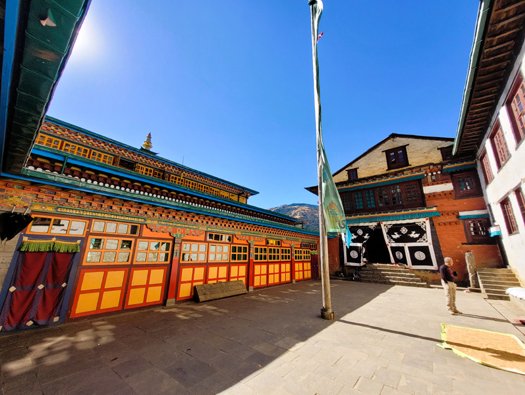
The Pikey Peak region is home to our founder, Gomba Sherpa. He grew up here. His family has lived in this region for centuries. That deep local bond gives you something extra that most trekkers never get. During our trek, you immerse yourself in local culture by spending a night at a private family homestay, with a unique look at daily life far from the tourist trail. A visit to an ancient family monastery and the local school is also included. You also visit the nuns of Thupten Choling, one of the largest Buddhist nunneries in Nepal. Because few trekkers visit this area, you discover a more authentic side of Nepal.
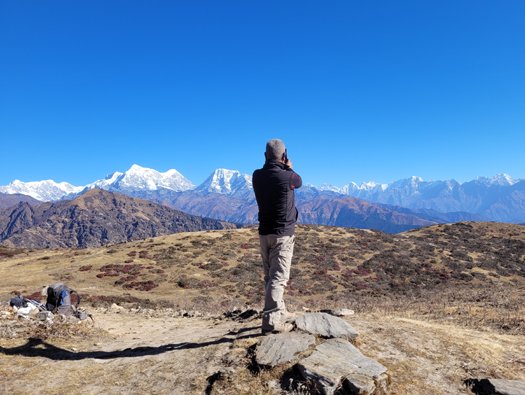
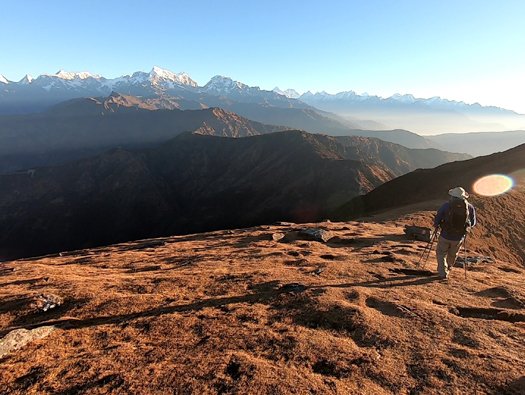
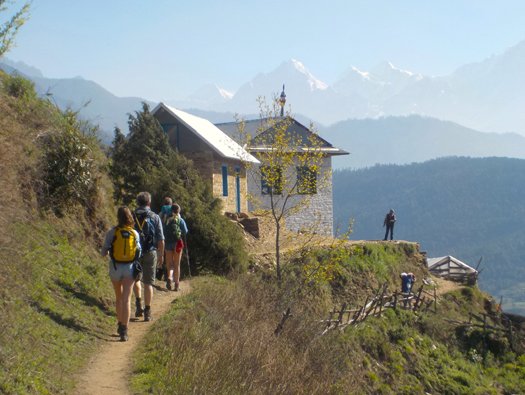
At High Camp, an early start rewards you with a golden sunrise from the peak. The views are breathtaking with snowy Himalayan peaks stretching in every direction. Sir Edmund Hillary himself said Pikey Peak offers the finest view of Mount Everest.
A jeep drive brings you to the start of the Pikey Peak trek. The trail connects villages like Sherpa Mude, Japre, Junbesi, Ringmo, and Phaplu. Your first night is at a Sherpa homestay in the village of Sherpa Mude. A short village walk takes you past the local school, where curious children will come out to greet you. You also visit a hidden family monastery steeped in Buddhist tradition. From there, the trail leads to the small settlement of Japre, home to another monastery and a large prayer wheel.
The path to High Camp winds through rhododendron forests and past small hillside settlements. From High Camp, you rise early and climb to Pikey Peak for a golden sunrise. Everest, Lhotse, Makalu, Kangchenjunga, they all appear along countless other snowcapped peaks. You then descend into the Junbesi valley, dotted with ancient Buddhist monasteries.
A highlight of the trek is the visit to the nuns of Thupten Choling Monastery, a deeply moving place. The trek continues to Phurteng, another fine viewpoint over the whole Khumbu region. From there, a descent to Ringmo leads you along an easy trail to Phaplu, a lively local village with its own shops and daily rhythm. A final jeep ride brings you back to Kathmandu.
You can extend the Pikey Peak trek, for instance, with the Dudh Kunda lake trek. Check here for details.
Our itineraries are designed to be flexible. If you would like to modify this plan, let us know, and we will work with you to create a personalized trip.
Day 1: Arrival Nepal; pick up at the international airport and drop off at a hotel in Thamel Kathmandu
Day 2: Drive from Kathmandu to Pattale (2625 m – 7 hrs.)
Day 3: Trek to Sherpa Mude overnight at Sherpa Homestay(2600 m – 6,5 hrs.)
Day 4: Visit local school and trek to Japre (2820 m – 5,5 hrs.)
Day 5: Trek to Pikey High camp (3615 m – 6 hrs.)
Day 6: Climb to Pikey Peak (4065 m) and trek to Jasmane Bhanjang (2875 m – 6,5 hrs.)
Day 7: Trek to Junbesi (2700m – 5 hrs.)
Day 8: Trek to Thupten Choling monastery (3031 m) for a visit, and onwards to Phurteng (2950m – 7 hrs.)
Day 9: Trek to Phaplu (2470 m – 4,5 hrs.)
Day 10: Drive Phaplu to Kathmandu (9 hrs.)
Day 11: Free day at leisure in Kathmandu
Day 12: Departure; pick up from the hotel and drop off at the international airport
During the trekking season prices may rise. The final price depends on the trekking season, group size and the cost of local transfers.
Cost includes:
– Pick up and drop off from Kathmandu International Airport to the hotel
– 3 nights hotel room in Kathmandu; breakfast included
– Teahouse room during trek
– Return drive from Kathmandu to the start and from the end of the trek
– Licensed and certified mountain guide. Well experienced and English speaking
– Porter service for carrying luggage; 10 kg per person
– Salary, food, accommodation and insurance for the mountain guide and porters
– 3 meals per day; breakfast/ lunch/ dinner
– Free use of waterproof bag for your luggage
– TIMS card and local taxes
– Support of the Sherpa Heritage Trails head office in Kathmandu
Cost excludes:
– International flight to Kathmandu
– Nepal entrance visa
– Lunches and dinners in Kathmandu
– All beverage bills, hot shower, internet services, laundry and battery charge during trek
– Personal travel insurance
– Rescue operation charge in case of an emergency
– Any cost that arises due to a change of itinerary like flight delay, natural calamities, etc.
– Gratitude and tips for mountain guide and porters
Pikey Peak sits in the Solukhumbu region, yet most trekkers have never heard of it. That is what makes it special. The trails are quiet, the villages are genuine, and the ancient Buddhist culture here has not been shaped by tourism.
You walk through rhododendron forests, past monasteries, prayer wheels, and mani walls, with high Himalayan peaks in sight for much of the route. This region sees very few visitors, and that keeps the experience authentic.
Yes, without doubt. The views from the summit alone make it worth the trip. At 4,065 meters, you see Everest, Lhotse, Makalu, and Kangchenjunga all at once during a golden hour sunrise. Sir Edmund Hillary called it the finest viewpoint for Mount Everest.
Beyond the summit, the trail takes you through quiet Sherpa villages, ancient monasteries, and a landscape untouched by mass tourism.
The Pikey Peak trek is rated easy. It suits first-time trekkers and those looking for a rewarding mountain experience without extreme altitude or rough terrain. Daily walks range from 4.5 to 7 hours. The highest point is 4,065 meters. A basic level of fitness is enough. If you can walk several hours on hilly ground, you are ready for this trek.
| Pikey Peak Trek | Mardi Himal Trek | |
| Duration | 8 to 12 days | 7 to 9 days |
| Difficulty | Easy | Easy to moderate |
| Maximum altitude | 4,065 m | 4,500 m |
| Region | Solukhumbu / Lower Everest | Annapurna |
| Crowds | Very few | Moderate |
| Cultural depth | Deep, authentic Sherpa culture | Mixed |
| Unique experience | Edmund Hillary’s finest Everest viewpoint, Thupten Choling nunnery | Close views of Mardi Himal and Machhapuchhre |
Mardi Himal is a solid, shorter trek with fine mountain views in the Annapurna region. It is slightly higher and a touch more demanding. Pikey Peak takes longer but goes deeper into ancient Buddhist culture and Sherpa traditions in the heart of Lower Everest.
The region sees very few visitors, the culture feels untouched, and the sunrise from the summit is hard to beat. If you want a trek that goes beyond the well-worn trails, Pikey Peak is the stronger choice.
Our standard Pikey Peak trek takes 12 days. This includes the jeep drive from Kathmandu to the trailhead, the full trek through the Solukhumbu region, and a free day in Kathmandu at the end. Daily walks range from 4.5 to 7 hours, which keeps the pace comfortable.
The route covers varied terrain, from forested ridges and small settlements to the open views from Pikey Peak summit. The itinerary can be shortened or extended. Just let us know, and we will put together the right plan for you.
The best months are February through May and September through December. During these seasons the weather is stable, the trails are clear, and the mountain views are at their sharpest. Spring brings rhododendron forests in full bloom. Autumn and early winter offer crisp skies and strong visibility. December is cold but often beautifully clear.
You set off before dawn from High Camp. As you reach the summit at 4,065 meters, the golden hour light spreads across the Himalayas. On a clear day, the panorama stretches across four of the world’s five highest peaks. Everest, Lhotse, Makalu, and Kangchenjunga all appear, clear and close. Sir Edmund Hillary himself said Pikey Peak offers the finest view of Mount Everest.
Yes. Pikey Peak remains one of the quietest treks in the Solukhumbu region. Few other areas in Nepal see so little trekking traffic. On many sections, you will walk for days without passing another group. Large groups are rare. That sense of space is hard to find on the more popular routes in Nepal.
The Pikey Peak trek needs a TIMS card. TIMS stands for Trekkers Information Management System and is the standard for trekking in Nepal. Compared to treks like Manaslu or the Everest region, the permits here are simple and do not cost much. We arrange your TIMS card before the trek begins, so you are all set before you head out.
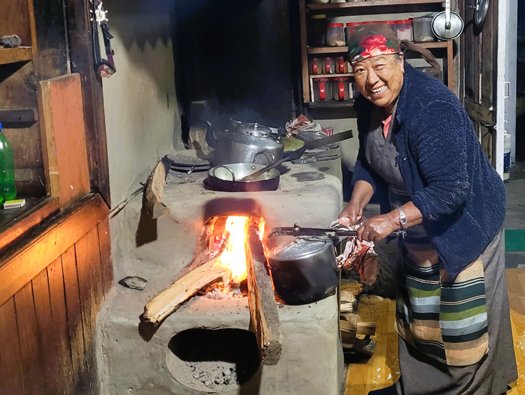
Our founder, Gomba Sherpa, grew up in this region. His family has lived here for centuries. That is not something any other trekking company can offer. When you trek with us, you stay at his brother’s family homestay, giving you a direct look at daily life far from the tourist trail.
You also visit a small private family monastery that is closed to outside visitors. Gomba’s local roots run deep, and that shapes every part of how this trek is run.
Yes. Solo travelers are very welcome. We pair you with one of our experienced local guides and handle all logistics. You do not need to find a group or arrange anything yourself. Just let us know, and we’ll take care of the rest.
Yes, this is one of the few treks in Nepal that genuinely suits beginners. The altitude is manageable, the terrain is not technical, and the daily distances are reasonable. That said, some basic fitness helps. If you can walk several hours on hilly ground, you are well prepared. A good guide will help you manage the pace and will always be there when you need support.
Yes. The most natural addition is an extension to Dudh Kunda Lake, a sacred glacial lake sitting at 4,560 meters. It adds a few days and takes you deeper into the Solukhumbu wilderness. Those who want a longer adventure can also connect to the Everest region, continuing the journey north towards the classic Everest trails.
For experienced trekkers, combining Pikey Peak with a Mera Peak climb is another strong option. Mera Peak at 6,461 meters is one of the most accessible trekking peaks in Nepal. Let us know what you have in mind, and we will put together the right route for you.
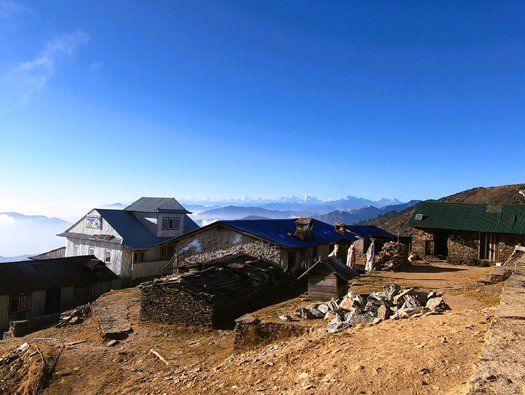
Most nights are spent in local teahouses and lodges. Rooms are simple and clean with a bed and blankets. One highlight is a night at a private Sherpa family homestay in Sherpa Mude, which gives you a personal look at daily life in the region. Each teahouse has a dining area where meals are served. In the evenings, a stove burns in the dining room.
Teahouses along the route serve a mix of Nepali and simple Western dishes. Portions are generous, and meals are filling after long days on the trail. Dal Bhat is the staple and the best value on the trail. You will also find noodles, fried rice, soups, eggs, pancakes, tea, and coffee. At the family homestay, meals are home-cooked and give you a genuine taste of local Sherpa food.
We encourage all trekkers to carry a reusable bottle and a water filter. Clean water sources are available along the route. Using a filter is better for your budget and cuts down on plastic waste in the mountains. We provide guidance on safe water points throughout the trek.
Mobile signal works at most places along the route. Some teahouses offer Wi-Fi for a small fee, though not at High Camp. Speeds are slow, and video calls are rarely possible. It is best to let family and friends know in advance that contact will be limited. Most trekkers find it a welcome break from their phones.
Yes, most teahouses have power sockets available. Charging is possible in common rooms or sometimes in your own room. At High Camp, there is no charging available. Bring a power bank as backup. Between teahouses, there will be no chance to charge until you reach the next lodge.